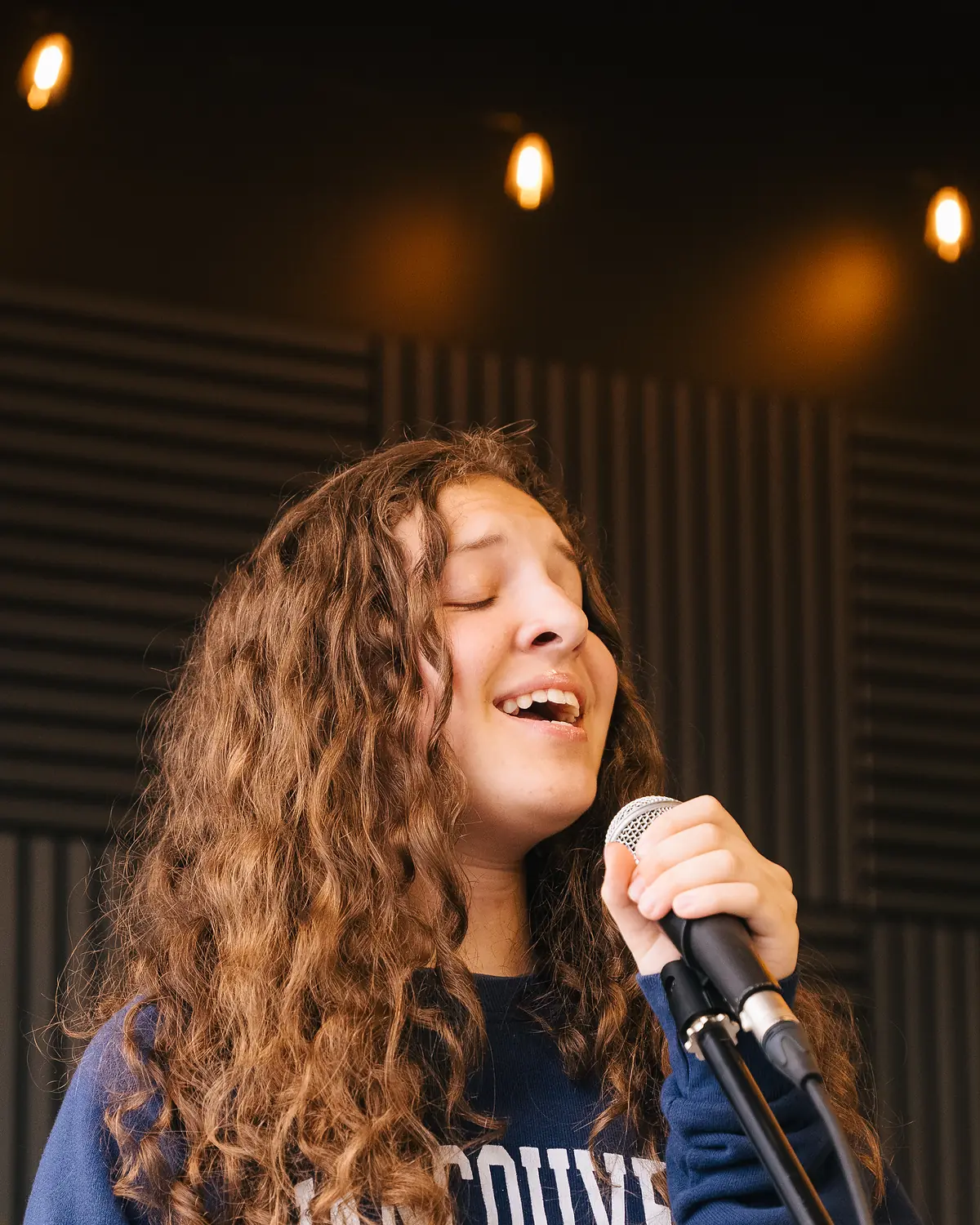
Young singer at the microphone during a vocal performance at Resonate in Edmonton

Voice Lessons

Voice is the one instrument you already have.

Most people have been using it long before they ever think about a lesson. Singing along in the car, humming in the kitchen, carrying a melody without meaning to. For some, voice becomes the primary way they make music. For others, it is where songwriting, performing, or being in a band opens up.

The body is the instrument.

Breath, posture, muscle, and attention all shape the sound. Voice develops a sense of pitch, listening, timing, and expression through direct physical experience. It builds comfort with using your own sound in the presence of other people.

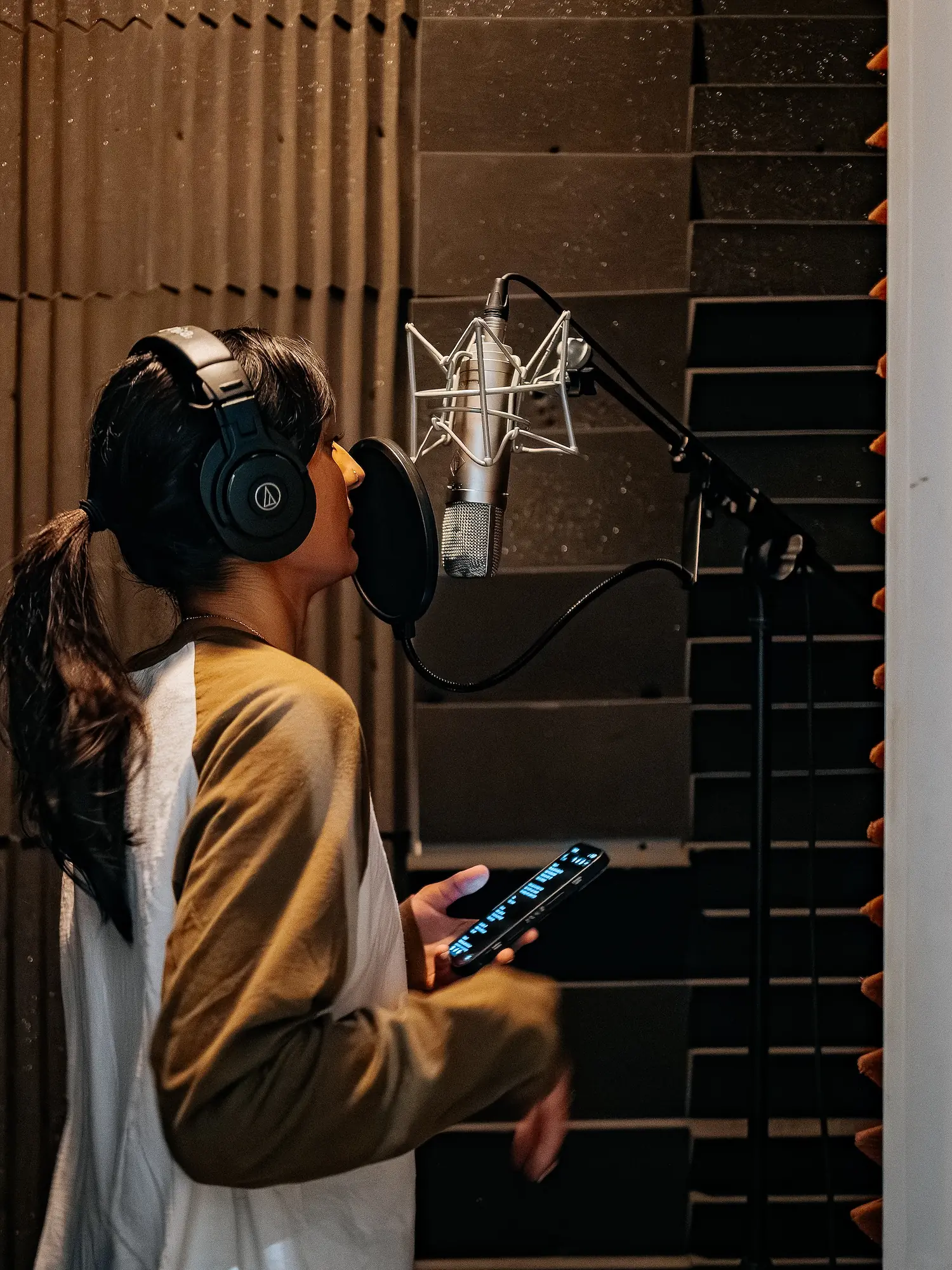
Vocalist recording in the Resonate vocal booth with headphones and large-diaphragm microphone

How voice learning tends to unfold here

Most people do better when voice is approached as something lived with over time.

01

Start with the voice already there

Most voice students arrive already using their voice. Singing along to things, humming, speaking publicly, writing lyrics on their own. Lessons work better when that is the starting material, not something to move past before real work begins.

02

Breath, body, and sound are all part of the lesson

A voice lesson includes breath work, posture and movement, warm-ups that can sound strange out of context, and real time spent on how the body is carrying sound. The body is the instrument, so the lesson works with the body as much as with songs.

03

Voice lands at the front of a lot of what happens here

Voice usually sits at the front of performance, songwriting, recording, and playing with other people. More voice students end up in those situations than students of any other instrument. They come up naturally at Resonate: recitals, sessions in the recording studio, songs being written, the monthly After Hours Jam.

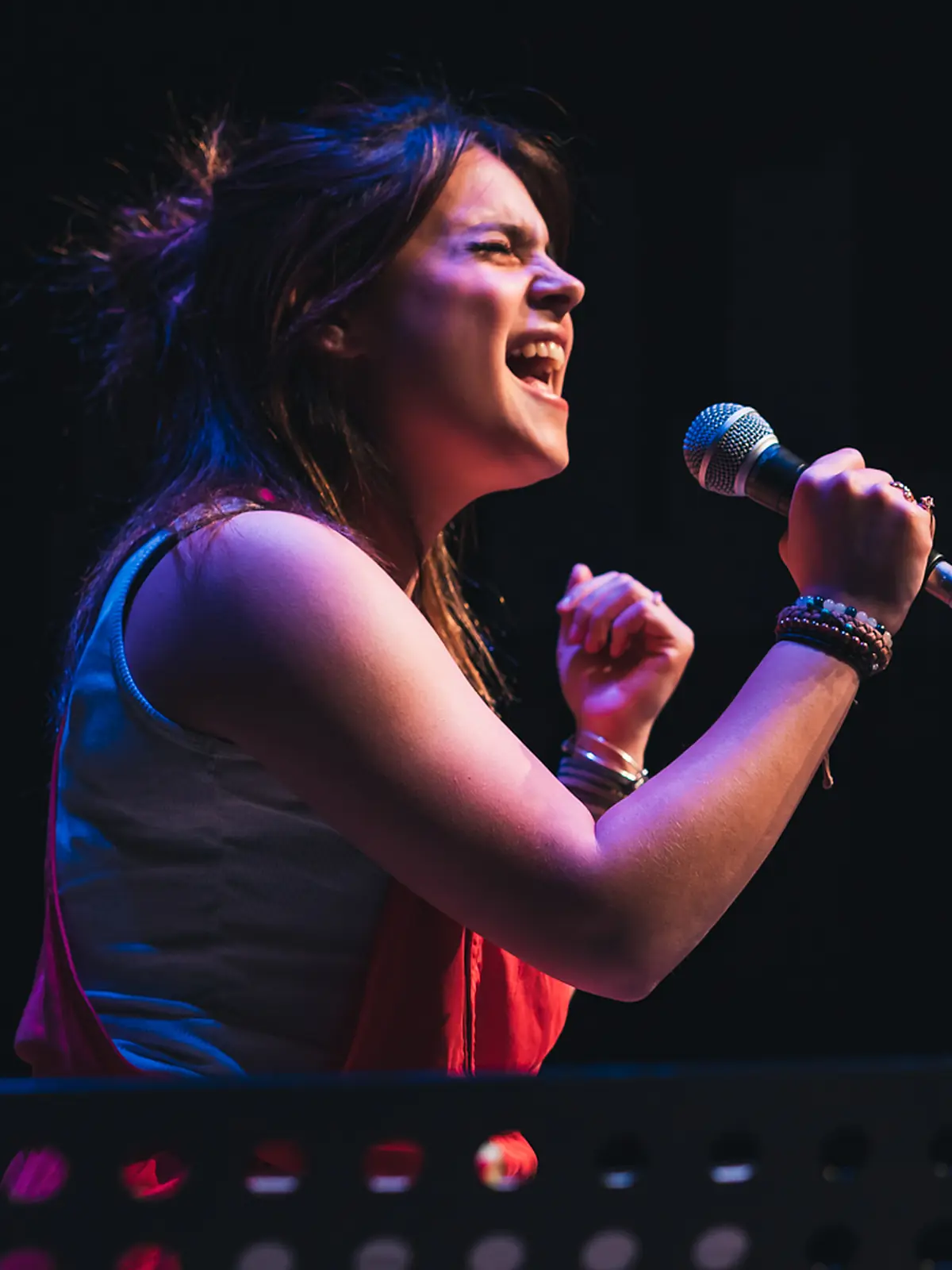
Vocalist performing at the front of a band on the Resonate stage in Edmonton

A good fit often looks like this.

Voice tends to work especially well for people drawn to singing the music they love, or for people who want to be at the front of the music they make.

That might mean starting with a few songs in mind, returning after a long time away, returning after being told to stop, working toward a band or a solo project, writing your own songs, or wanting a steadier and more present voice in general, including adults who take lessons to carry themselves better in public speaking.

Practical lesson options

Private voice lessons are available through weekly membership or as drop-ins.

30 minute private lesson

Often a strong fit for younger beginners, or for people who want a consistent weekly starting point.

60 minute private lesson

A better fit for older students, adults, returning singers, or anyone who benefits from more room to settle in and work through ideas.

Weekly membership

The primary lesson structure at Resonate. It includes a reserved weekly lesson time, make-up flexibility with advance notice, and one complimentary recording studio hour every three months.

Drop-ins

A flexible option for students who do not want a fixed weekly time. These are single lessons booked individually based on teacher and schedule availability.

Pricing snapshot

01
30 minute lesson – drop-in
$40
02
30 minute lesson – weekly membership Lessons on Mondays are $135/mo to account for long weekends
$145/mo
03
60 minute lesson – drop-in
$75
04
60 minute lesson – weekly membership Lessons on Mondays are $265/mo to account for long weekends
$285/mo

Weekly membership includes make-up flexibility with at least one week's notice and one complimentary recording studio hour every three months.

Lessons here are shaped by real teachers.

Voice teachers at Resonate are working artists whose own lives are spent at the front of bands, at the front of songs, and at the front of their own performances. That matters with voice, because voice sits close to the person singing. The teacher has stood in the place the student is learning to stand.

In a one-to-one lesson, guidance adjusts to the person. A teacher can notice what the voice is doing on a particular day, where the body is holding tension, and how to shape the next step around the actual student in the room. That kind of attention is particularly useful with voice, where the instrument cannot be separated from the person using it.

Click a portrait to hear more about how they teach.

Starting is simple

Tell us a little about who lessons are for and what you have in mind.
You do not need everything figured out first.

Start Here